10 Benefits of Using an Inline Exhaust Fan (and When It’s Worth It)
If your bathroom, laundry room, or basement feels stuffy, smells bad, or stays wet for too long, an inline exhaust fan can be a big upgrade.
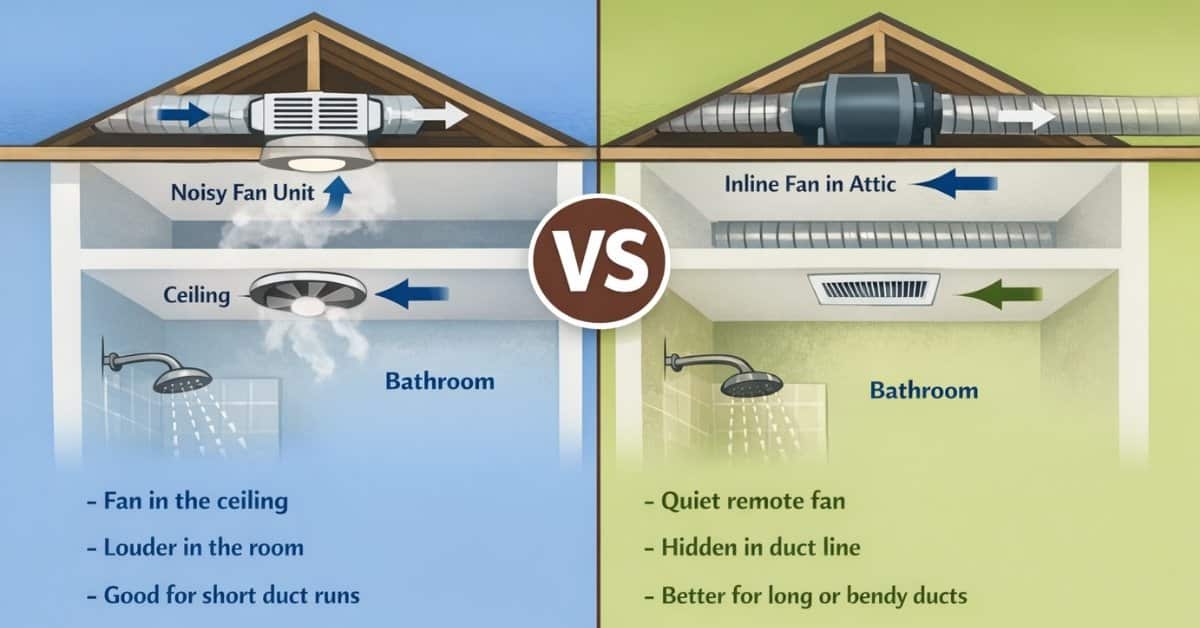
An inline exhaust fan is a fan that sits inside the duct (pipe), usually in the attic, ceiling space, or crawl space. It pulls dirty, wet air out and pushes it outside—but the fan motor is not right above your head, so it can be much quieter.
TL;DR (Quick Answer)
Inline exhaust fans are great because they are usually:
- Quieter
- Stronger on long ducts
- More flexible to install (and can even help more than one room)
Quick Comparison: Inline vs Regular Exhaust Fan
| Feature | Inline Exhaust Fan | Regular Wall/Ceiling Exhaust Fan |
| Noise in the room | Lower (fan is away from you) | Higher (fan is right in the room) |
| Works well with long duct runs | Yes (usually better) | Often struggles |
| Looks | Only a small grille shows | Fan unit is visible |
| Best for | Bathrooms, laundry, basements, multi-room | Small rooms with short duct |
What you’ll get in this article:
I’ll explain the 10 real benefits in simple words, plus where it’s worth it, when it’s not, and how to choose the right one—without confusing technical talk.
What Is an Inline Exhaust Fan? (Simple Definition)
An inline exhaust fan is a fan that is installed inside the duct pipe (the tube that carries air).
Instead of sitting on your bathroom ceiling or wall like a normal exhaust fan, it sits in the middle of the duct line—often in the attic, false ceiling, or a crawl space.
How it works (very simple)
- The fan pulls wet, smelly, dirty air from the room
- Then it pushes that air through the duct
- And finally the air goes outside your home
Inline fan vs regular exhaust fan (easy difference)
- Regular exhaust fan: the fan is inside your room (ceiling/wall), so you hear it more.
- Inline exhaust fan: the fan is away from the room, so the room can stay quieter, and the fan can push air better through longer ducts.
Quick example
Imagine a long straw.
A small fan at the end may struggle to pull air through it.
But a stronger fan placed “in the middle” of the straw can move air more easily. That’s the idea behind inline fans.
The 10 benefits
Much quieter (because the fan is not right above your head)
This is the #1 reason many people love inline exhaust fans.
With a normal bathroom exhaust fan, the motor is inside the room, so you hear the noise loudly.
But with an inline exhaust fan, the fan sits inside the duct, usually in the attic or ceiling space. So the sound stays far away from you.
What this feels like in real life:
- You can talk normally in the bathroom
- You won’t feel annoyed by a loud “rrrrrr” sound
- Guests won’t avoid using the fan because it’s too noisy (yes, that happens)
Best for: bathrooms near bedrooms, nurseries, or offices (where silence matters).
Strong airflow even with long ducts and bends
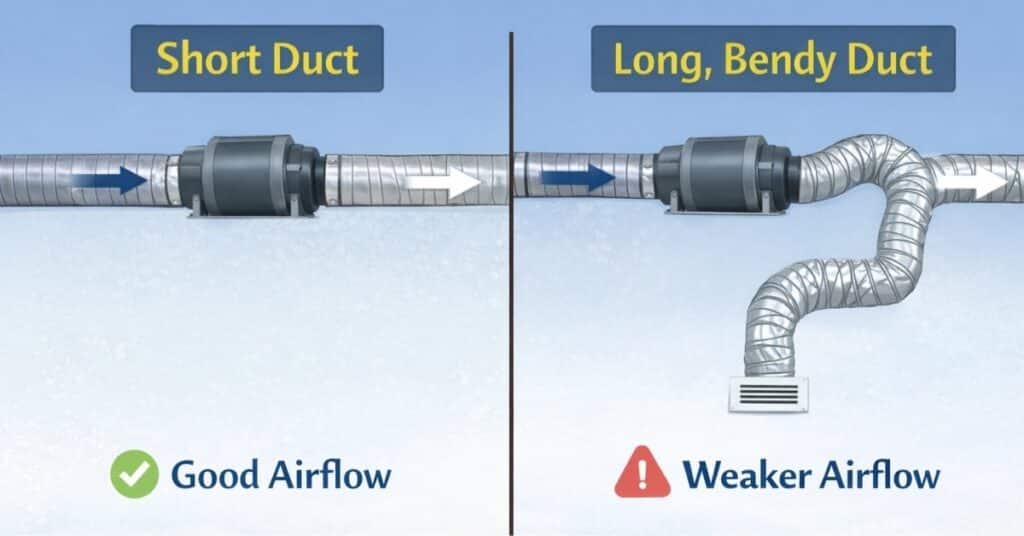
A big problem with regular wall/ceiling exhaust fans is this:
If the duct pipe is long, or it has many bends, the fan can get weak. Then moisture and bad smells stay in the room longer.
Inline exhaust fans are usually better at pushing air through:
- longer duct runs (more distance)
- elbows/bends in the duct
- setups where the outlet is far away
Why this matters:
If your bathroom stays steamy for a long time after a shower, you’re more likely to get:
- damp walls
- bad smell
- mold spots (especially in corners)
Inline fans help move the wet air out faster, so the room dries quicker.
Best for: bathrooms or laundry rooms where the vent outlet is far from the room.
Flexible installation (you can place it where it works best)
With a regular exhaust fan, you don’t have many choices. It must sit on the ceiling or wall of the room. But an inline exhaust fan can be installed inside the duct line, so you can place it where it performs better.
That means you can often install it in places like:
- attic space
- false ceiling
- crawl space
- a utility area (near the duct path)
Why this is useful:
- You can avoid installing a big noisy unit inside the room
- You can keep the fan away from areas where people sleep or work
- It becomes easier to build a neat ventilation path in tricky homes
Best for: homes with limited bathroom ceiling space, long duct routes, or remodel projects.
Better moisture control (helps reduce mold and bad smells)
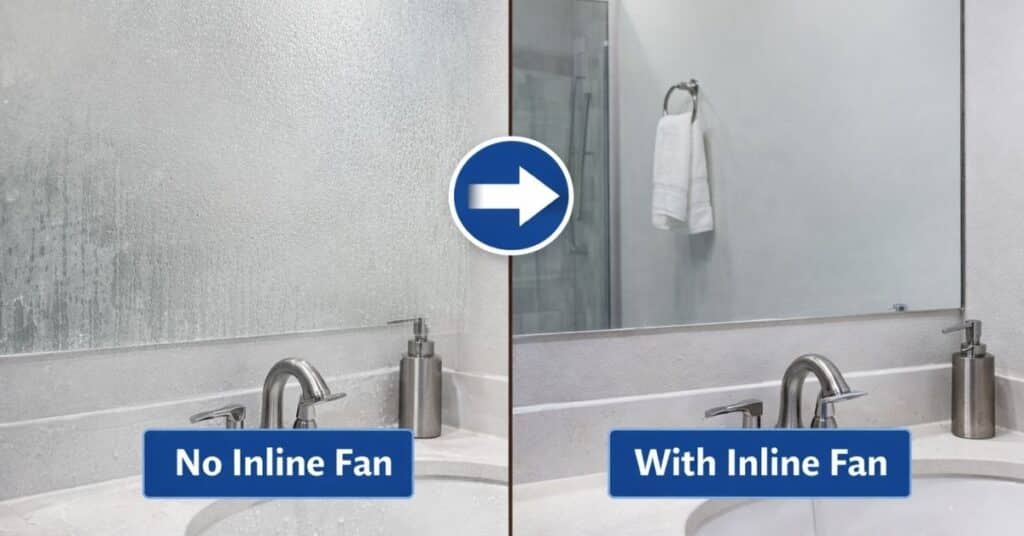
Bathrooms and laundry rooms create a lot of moisture. If that wet air stays inside, it can cause:
- foggy mirrors for a long time
- damp walls and ceilings
- peeling paint
- mold spots and a “musty” smell
An inline exhaust fan removes wet air faster, so the room dries quicker after a shower or after drying clothes.
Simple tip (works really well):
Run the fan during the shower and 15–20 minutes after. This small habit can make a big difference in keeping the room dry.
Best for: bathrooms with no window, humid areas, or homes where mold is already a problem.
One fan can ventilate more than one room (multi-room setups)
This is a big advantage that many people don’t know.
With the right duct setup, one inline fan can pull air from:
- two bathrooms
- a bathroom + laundry room
- multiple small rooms
Instead of buying and installing separate fans in each room, you can use one stronger inline unit and connect multiple vents to it (with proper planning).
Why this matters:
- less clutter in ceilings
- often quieter overall
- can be cost-effective in some homes
Important note: Multi-room setups need proper duct sizing and balancing, so the airflow is shared correctly. If done wrong, one room may get most of the airflow.
Removes bad odors and stale air faster (your room feels “fresh”)
Inline exhaust fans don’t just fight moisture—they also help remove:
- toilet smells
- cooking or laundry odors (in connected spaces)
- chemical smells (like paint or cleaners)
- “stale” air in basements or storage rooms
Because many inline fans have strong airflow, they can clear the air faster, so the room feels clean and comfortable sooner.
Best for: bathrooms used by guests, laundry rooms, basements, and any room that feels stuffy.
Can save energy when paired with the right controls (timer, humidistat)
A fan saves you money only when it runs smartly, not just “on all day.”
Inline fans work really well with simple controls like:
- Timer switch (runs for 10–30 minutes and turns off)
- Humidistat (turns on when humidity is high)
- Speed control (use low speed daily, high speed when needed)
Why this matters:
You remove moisture quickly, then the fan shuts off—so you’re not wasting electricity.
Best for: families who forget to turn off fans, and bathrooms that stay humid for long.
Looks cleaner (only a small grille is visible)
Many people don’t like the look of big exhaust fan boxes on the ceiling or wall.
With an inline exhaust fan:
- the fan motor is hidden inside the duct line
- inside the room, you usually see only a simple grille/vent cover
Why this matters:
- your bathroom or laundry room looks more neat and modern
- it’s easier to match the vent cover with your ceiling design
- great for premium bathrooms or newly renovated spaces
Best for: modern homes, new builds, and anyone who cares about clean interior design.
Maintenance can be easier (when the fan is placed smartly)
With regular exhaust fans, cleaning can be annoying because the fan sits in the ceiling and collects dust right there.
Inline fans can be easier to maintain if installed in an accessible place, like:
- attic with a safe access point
- service panel area
- utility space
Then you can check/clean the fan without standing under a ceiling cutout.
Quick reality check (EEAT):
If the fan is installed in a very tight space with no access, maintenance becomes harder. So placement matters.
Best for: homes where you can give the fan a small “service access” area.
Easy to upgrade later (smart controls, better airflow, future remodeling)
Inline exhaust fans are great if you want a system that can grow with your home.
Later on, you can often add or upgrade things like:
- a better timer switch
- humidity sensor (humidistat)
- a smarter controller (for automatic on/off)
- improved ducting or an extra vent (during renovation)
This is helpful because many people upgrade bathrooms, add a laundry space, or finish a basement later. An inline setup can be easier to expand than replacing a full ceiling fan unit again and again.
Best for: remodel plans, new builds, and homeowners who want a “long-term” ventilation setup.
Where inline exhaust fans make the biggest difference
Inline fans are not for every home. But in these situations, they shine:
They are perfect for:
- Bathrooms with long duct runs (far distance to the outside vent)
- Bathrooms near bedrooms (quiet matters)
- Laundry rooms (humidity + lint + smell)
- Basements and crawl spaces (stale, damp air)
- Multi-room setups (2 bathrooms or bathroom + laundry)
- Garages/workshops (odor and fumes—when venting is designed safely)
Quick “Is inline right for me?” checklist
If you say YES to 2 or more, inline is usually worth it:
- My bathroom stays steamy for a long time
- My exhaust duct is long or has many bends
- I want a quieter fan
- I want a cleaner look (only a grille in the room)
- I may want to ventilate more than one room
- I’m remodeling or building a new home
When an Inline Exhaust Fan is NOT Worth It
Inline fans are great, but they’re not always the best choice. In some homes, a normal wall/ceiling exhaust fan can do the job perfectly.
Here are the most common times when an inline fan may not be worth it:
- Your duct run is short and straight
If the vent pipe goes outside quickly (with very few bends), a regular exhaust fan can work fine. - You don’t have space or access for ductwork
Inline fans need room in the duct line (like an attic/ceiling space). If your home has no access, installation can become difficult and costly. - Your main problem is not ventilation
If the room is damp because of leaks, rising damp, or no sunlight, a fan helps—but it won’t fix the real cause. - You’re looking for the cheapest option
Inline fans can cost more upfront (fan + ducting + labor). They are more of a “better performance” choice, not always a budget choice.
Simple rule:
If your room is small and your duct path is easy, go simple.
If your duct path is long, noisy, or tricky—inline is usually the upgrade.
How to Choose the Right Inline Exhaust Fan (Simple Step-by-Step)
Choosing the right inline fan is not hard if you follow these steps. Don’t just buy the biggest fan—buy the right one for your room and duct.
Step 1: Pick the right airflow (CFM) — “how much air it moves”
CFM means Cubic Feet per Minute. In simple words:
Higher CFM = the fan can move more air.
A quick, easy rule for most bathrooms:
- Small bathroom: 80–100 CFM
- Medium bathroom: 100–150 CFM
- Large bathroom: 150+ CFM
If you have a steam shower or the bathroom stays wet for long, choose a bit higher.
Step 2: Think about your duct (long ducts need stronger fans)
If your duct is:
- long, or
- has many bends
…you should choose a fan that can still push air well through that duct. Many fans look strong on paper, but performance drops when ducting is difficult.
Step 3: Check noise and control options
Even though inline fans are usually quieter, still look for:
- lower noise ratings (if listed)
- a timer switch (very useful)
- a humidity sensor (even better for bathrooms)
Step 4: Match the duct size
Inline fans are made for specific duct sizes (like 4”, 6”, etc.).
If the duct is too small, airflow drops and noise can increase.
Simple tip:
Try to match the fan to the duct size recommended by the brand. Don’t force a big fan onto a small duct.
Installation Basics (Easy to Understand + Common Mistakes)
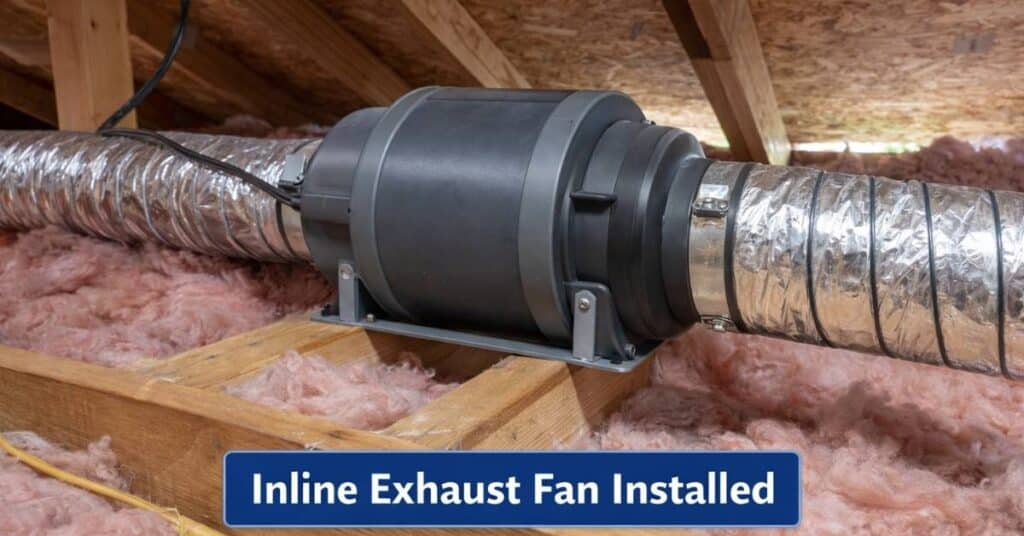
Inline exhaust fans work best when they are installed the right way. You don’t need to be an expert, but you should know the basics so you don’t waste money.
Where the inline fan is usually installed
Most inline fans are placed:
- inside the duct line
- in the attic, false ceiling, or crawl space
- not directly inside the bathroom ceiling (only a grille is inside the room)
The basic airflow path (simple)
Room grille → duct pipe → inline fan → duct pipe → outside vent
Common mistakes that ruin performance
These mistakes make even a good fan feel “weak”:
- Too many bends in the duct
Every bend slows the air down. Fewer bends = better airflow. - Duct is too small
A small duct can choke airflow and increase noise. - Duct leaks
Leaks can dump moist air into ceiling spaces (bad idea). Joints should be sealed properly. - Venting into the attic instead of outside
This is a serious mistake. Moist air must go outside, not into your attic or ceiling—otherwise it can cause dampness and mold.
When to call a professional (EEAT + safety)
Call a pro if:
- wiring is needed and you’re not comfortable with electrical work
- you need to cut a new exterior vent hole
- you’re doing a multi-room setup (duct balancing matters)
Maintenance & Troubleshooting (Quick Fixes)
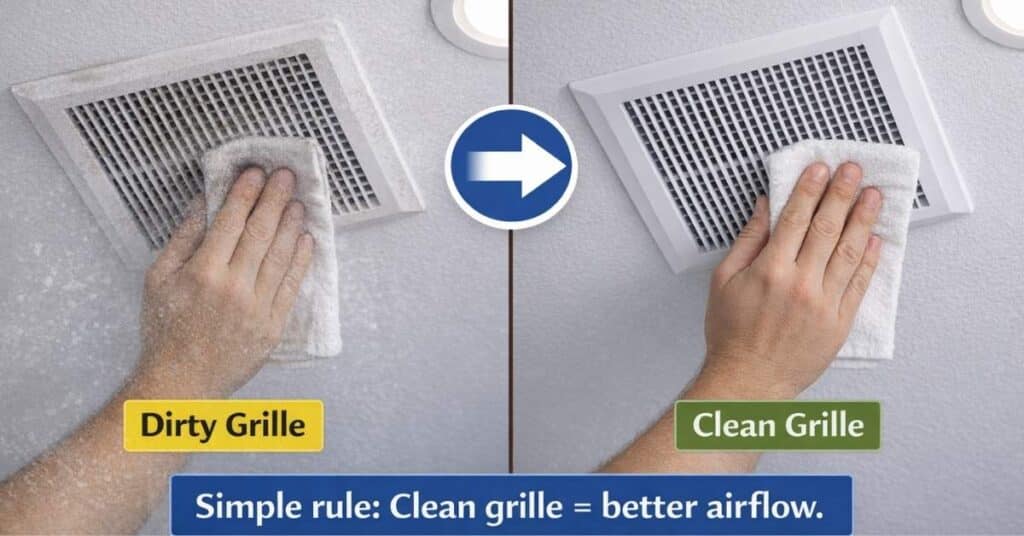
Inline exhaust fans don’t need daily care, but a little maintenance keeps them quiet and strong.
Simple maintenance (easy routine)
- Every 1–2 months: wipe or wash the room grille (dust blocks airflow)
- Every 6–12 months: check the duct connection area (make sure nothing is loose)
- If you have pets or lots of dust: check a bit more often
Quick troubleshooting table
| Problem | Most common reason | Quick fix |
| Fan is running but bathroom stays steamy | Duct too long / too many bends / weak sizing | Check duct path; consider higher CFM or better duct design |
| Fan is noisy | Loose mounting / duct rattling | Tighten mounts, add duct support, use insulated duct if needed |
| Bad smell still stays | Airflow not enough / grille blocked | Clean grille, check duct for blockage |
| Fan turns on but feels weak | Backdraft damper stuck / duct crushed | Inspect damper and duct shape |
| Water droplets in duct | Duct not insulated in cold area | Use insulated duct to reduce condensation |
Simple rule:
If the grille is dusty, airflow drops. Clean grille = better ventilation.
Inline Exhaust Fan FAQs (Simple Answers)
Are inline exhaust fans better than normal exhaust fans?
Often yes—especially when you want less noise and you have a long duct run or multiple bends. For a small bathroom with a short duct, a normal exhaust fan can also work fine.
Are inline fans really quieter?
Usually yes, because the fan motor sits away from the room (in the duct line), so you hear less noise inside the bathroom.
Can one inline fan vent two bathrooms?
Yes, it can—if the duct system is designed properly. If it’s done wrong, one bathroom may get most of the airflow, so planning and balancing matter.
How long should I run the fan after a shower?
A simple rule is 15–20 minutes after the shower. This helps remove leftover moisture so the room dries faster.
What size inline fan do I need (CFM)?
For many homes:
- Small bathroom: 80–100 CFM
- Medium bathroom: 100–150 CFM
- Large bathroom: 150+ CFM
If your duct is long or the bathroom stays humid, go a bit higher.
Do inline fans use a lot of electricity?
Most don’t, especially if you use a timer or humidity sensor so it runs only when needed.
Conclusion (Make the Smart Choice)
If you want ventilation that is quiet, powerful, and works well even with long ducts, an inline exhaust fan is one of the best upgrades you can make—especially for bathrooms, laundry rooms, and basements.
Here’s the easiest way to decide:
- If your bathroom stays steamy for too long → inline is a strong choice.
- If your duct run is long or has many bends → inline is usually better than a normal exhaust fan.
- If you want a clean look and less noise → inline wins.
- If your duct is short and simple and you want the cheapest option → a regular exhaust fan may be enough.
When you pick the right size (CFM), use good ducting, and add a timer or humidity switch, you get faster drying, less smell, and a more comfortable home—without annoying fan noise.